Storytime
Act I: The Architecture Episode
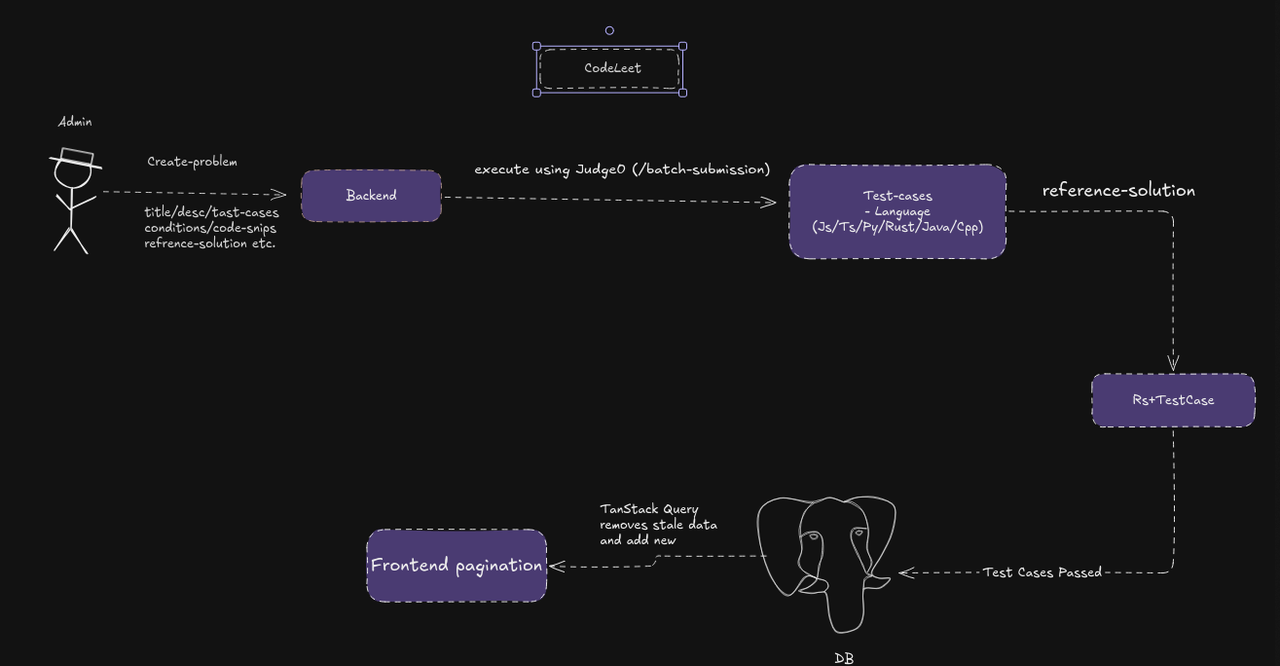
The plan: A LeetCode clone. Next.js on the front. Judge0 for code execution. Postgres for remembering things. Clerk so strangers can't log in as me. Simple.
The budget math: A shiny micro instance runs about $7.59/mo. A slightly shinier ARM one runs $6.13/mo. AWS gave me $140 of credits. That's 20 months of bliss, give or take a data transfer breach.
The first betrayal: The ARM instance (t4g, the cheaper, shinier one) cannot run Judge0. Not "runs slowly." Cannot. Judge0 publishes its Docker image amd64-only, a 3.3 GB monolith that looks at your Graviton chip and whispers "no." So the greedy chip shopping spree died on the tarmac. Everyone I know running ARM Judge0 is running amd64 Judge0 and fibbing about it.
This alone costed me about 2 dollar, litreally terminated the app 2 second after it spun.
Lesson learned: Check the architecture before you check the price. Your savings account and your CPU are not the same thing.
Act II: The Docker Files
You pull three images. Postgres: ~152 MB. Redis: ~45 MB. Judge0: 3.3 GB, dressed as 3.3 GB. Suddenly:
no space left on device
No sf, 8 GB default volume. Tried with 30 GB EBS. The wise heads suggested checking the size first.
Then, finally: curl localhost:2358/about returns JSON. But the outside world? Nothing. "Cant reach." Because of course — the EC2 security group is a velvet rope list, and port 2358 wasn't on it. We opened port 80 like gentlemen, sealed 2358 like the crown jewels, and pointed nginx at it until judge0.barmanji.com/about returned {"version":"1.13.1"}. Auth on that endpoint? Later. Much later. There's a TODO somewhere with my name on it.
Act III: What Does a 404 Even Cost?
The build that wasn't
The app builds locally. The stars align. Then Vercel, with the confidence of a salesperson who has never used the product:
ENOENT .next/next-server.js.nft.json
A phantom standalone output setting collides with Next 16.3 on Vercel — so famous it has its own issue number (#96646). The fix was shameful in its simplicity:
...(process.env.VERCEL ? {} : { output: "standalone" })One line. A / 0 in commit territory. It deploys.
Deep in the wilds of the Clerk
The sign-in buttons did nothing. The console file a missing file. Specifically:
GET /__clerk/npm/@clerk/clerk-js@6/dist/clerk.browser.js 404
Clerk decides where to serve its JavaScript from at build time using your *.vercel.app URL (auto-proxy, they call it). Then it decides again, at request time, using your actual custom domain. When those two disagree — and they do, for custom domains, the way cats disagree with closed doors — every request falls through the middleware into Vercel's cold, static 404. The deployment was signed out, in good standing, and coming to nothing.
We enabled frontendApiProxy in the middleware. Clerk will now proxy for you, it whispered. The /__clerk/* floodgates open, and in rushes...
The host_invalid incident
"We were unable to attribute this request to an instance running on Clerk.
Make sure that your Clerk Publishable Key is correct."
code: host_invalid
The proxy turns out to be a full-time job. It started tagging every request with its own Clerk-Proxy-Url header — including, it turns out, http://localhost:3000/__clerk on your own machine. Clerk's frontend API, very reasonably, went "who is localhost:3000?" and hung up. The same story, rebranded, plays out in production with your custom domain. One innocent refactor, and suddenly both your environments are having an identity crisis.
Post-mortem: The telemetry toggle we suspected? Exonerated. "Keys are fine"? They were. The culprit was that one config line between clerkMiddleware() and clerkMiddleware({ ... }) that we shipped in the name of progress. Lesson: read the diff, not the blog.
Epilogue: Static, But Not Vercel
And then, the final chapter — the one where Next.js, during the build, looks at pages that call currentUser() — which reads headers() — and says:
Route /profile couldn't be rendered statically because it used `headers`
Every page that reads the request is secretly dynamic, and Next wants them labeled dynamic. Add one line:
export const dynamic = 'force-dynamic';...to the layouts and pages that breathe, and suddenly everyone's allowed to breathe at runtime again.
What We Actually Learned
- Check
arm64before you commit to a chip. No Judge0 for the Graviton crowd. - Docker is honest. It tells you the disk is full, the password is missing, and the socket is off-limits. It saves you from yourself.
- Clerk's auto-proxy and custom domains have a relationship status of "it's complicated." If your JS 404s, look at who computed the URL, when, and using which host. The answers are rarely in the dashboard.
- The fix that matters is frequently one line, and the debugging that precedes it is frequently one weekend.
- Ship smaller, blame softer, and always check the diff.
Fin. (Or, as the deployment logs say: Generating static pages using 1 worker... forever.)